
Simple ADHD-Friendly Breakfasts
An ADHD brain eating with autistic simplicity.
Easy to Make - Minimal Ingredients - Repeatable - Cost Effective - Flavour
Five nutrients your brain actually asks for in the morning, spread across seven breakfasts you can build half-asleep: enough to feed dopamine's raw materials, hold your blood sugar steady, and give morning focus a fighting chance. No green-smoothie martyrdom required.
Wired Differently Australia
_____________________________________________________________________________
Every one of these is simple, low on prep, and short on ingredients. That suits an autistic brain that would rather not improvise before it is properly awake, and the foods themselves are chosen for what an ADHD brain runs on.
Here is the unglamorous truth about ADHD mornings: a lot of us don't eat one. We wake late, take the meds, and then the appetite window slams shut for six hours. By the time hunger comes back it's mid-afternoon and we're eating toast over the sink, wondering where the day went. So before a single nutrient gets discussed, the most useful line in this whole article is this: eat something before the tablet switches your hunger off. Everything below is just what to make that "something" out of.

Part One
What to eat
Seven breakfasts, sorted loosely from a hot cooked plate down to reheating last night's dinner. Pick by how much you can manage, not by guilt.

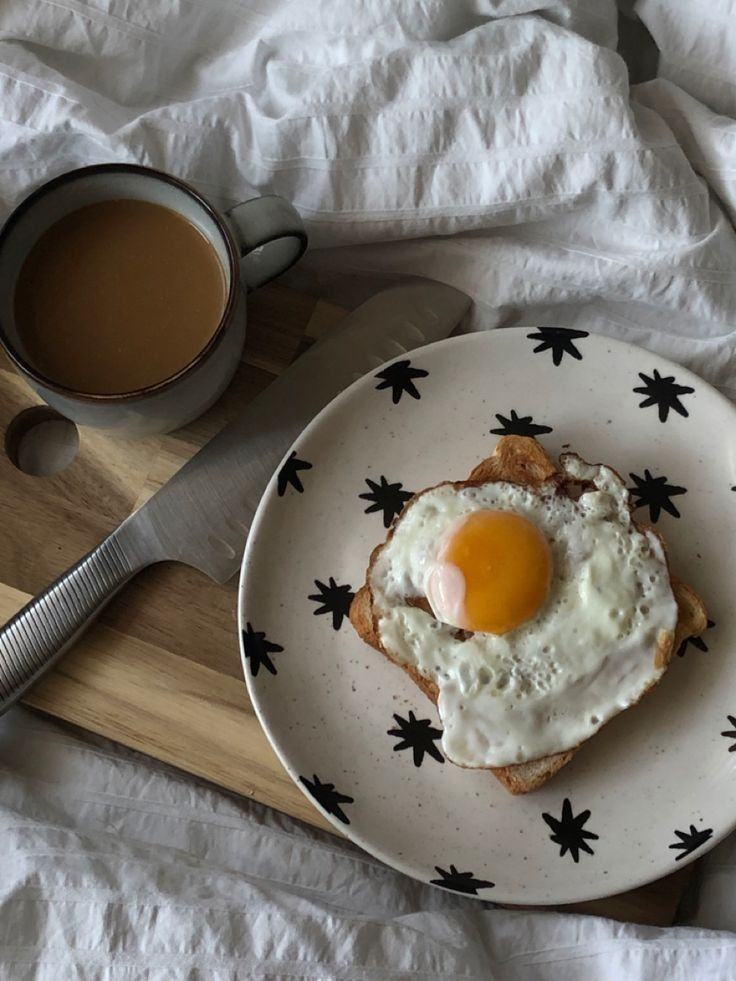
Eggs on Toast
The default. Fast, filling, about as low-effort as a cooked breakfast gets.
Two or three eggs, any way you like them.
Multigrain bread for toast. Keep the loaf in the freezer so it never goes stale.

Solid protein and choline from the eggs, fibre from the multigrain. Reach for omega-3 enriched eggs to nudge the one nutrient this misses.
_____________________________________________________________________________

Chia Bowl
No cooking, no heat, barely a dish to wash.
Chia soaked in milk for twenty minutes until it thickens.
A tablespoon of Greek yogurt.
Strawberries or blueberries.
Pumpkin seeds.

The protein rides on the milk, so make it dairy or soy; a tablespoon of yogurt is a garnish, not a protein source. Its omega-3 is the plant form your body barely converts, so this one leans on the other four.
_____________________________________________________________________________

Bagel with Toppings
Freezer bagel, minimal thought, endlessly swappable.
A bagel, kept in the freezer.
Cottage or cream cheese.
Sandwich meat, tempeh, or salmon.

Cottage cheese beats cream cheese on protein, and salmon is the topping that actually brings omega-3. Sandwich meat is processed, so keep that version occasional. A seeded bagel claws back some of the fibre a white one lacks.
_____________________________________________________________________________

The Fry Up
A hot, savoury plate for people who cannot face sweet before noon.
Two eggs, any way.
Mushrooms.
Half a tomato with a slice of cheese melted over it.

Strong on protein and fat, thin on magnesium and omega-3. Scatter pumpkin seeds over the mushrooms and use omega-3 eggs to close both gaps in one move.
_____________________________________________________________________________

Porridge with Brown Sugar
The slow-burn option. Oats keep you level for hours.
Porridge oats.
A little brown sugar.
Milk.

Oats are a genuine slow carb, the steadiest energy on the list. One honest catch: brown sugar is not a health food, it is white sugar with a trace of molasses, so keep it to a small spoon or the slow-burn point undoes itself. Dairy or soy milk keeps the protein up, and a few berries or a little cinnamon sweeten with less of a spike.
_____________________________________________________________________________

Breakfast Burrito
The clean-out-the-fridge option. Wrap whatever is there and go.
Mini breakfast sausages.
Wraps.
Whatever is in the kitchen: spinach, black beans, cheese, egg, tomatoes, mushrooms, salt, pepper.

The beans, egg and veg do the real work: protein, fibre and magnesium in a single wrap. The mini sausages are the processed part, so treat them as the flavour rather than the foundation, and keep them occasional.
_____________________________________________________________________________

Last Night's Leftovers
The most underrated breakfast going: food that already exists, asking zero decisions.
Any hearty leftovers with meat in them.
A little cheese melted over the top.

The win here is executive function, not the nutrient row. Reheating last night's dinner needs no decisions, no recipe, no shopping, which is the exact wall that stops so many of us eating at all. What it covers depends entirely on what last night was, so the tags show only the meat-and-cheese floor.
_____________________________________________________________________________
And to drink
Water first, and enough of it. Mild dehydration measurably dents attention and working memory, which is a tax an ADHD brain can least afford. Filter it if your tap water tastes of chlorine and that is what stops you drinking enough, that is a perfectly good reason. But treat "low chemical water" as the marketing phrase it is: water is a chemical, the minerals in it are chemicals, and nothing about stripping safe, regulated tap water of its imaginary toxins sharpens your focus. Drink the water, skip the mythology.
Coffee is welcome, with one caveat that lands harder here than usual. Caffeine is a mild stimulant, and some ADHD brains focus better on it while others just get jittery, so read your own. The real issue is timing. Coffee blunts appetite, and layered on top of appetite-suppressing medication it can shut the food window before you have eaten anything at all. So the order is fixed: food first, coffee second. Keep it slightly apart from the seeds and yogurt too, since the compounds in coffee modestly cut how much of their iron and zinc you take in. Coffee is the reward for eating, not the replacement for it.
The most powerful thing on any of these plates isn't a nutrient. It's the fact that you ate at all, before your meds decided lunch was cancelled.
_____________________________________________________________________________
Part Two
The shop
The real barrier to breakfast is rarely the cooking. It is standing in a shop with no plan, or opening a fridge full of things that went off while you weren't looking. So here is the whole list, sorted not by food group but by how long things survive, built for a brain that would rather not shop often.
Buy once, they won't go off
Stock these and forget about them for months. Bread and bagels count, as long as they go straight in the freezer.

Lasts a fortnight
Top these up every couple of weeks, not every trip.

The only weekly buys for this breakfast list
The short list of fresh things to grab each week. That is the entire recurring shop.

_____________________________________________________________________________
Part Three
Why it works
Protein: the dopamine raw material
Your ADHD brain runs on thin margins of dopamine and noradrenaline, the two chemicals your stimulant medication spends all day nudging. Both are built, step by step, from an amino acid called tyrosine, and the only way to get tyrosine is to eat protein. Phenylalanine becomes tyrosine, tyrosine becomes L-DOPA, L-DOPA becomes dopamine, dopamine becomes noradrenaline. No protein in, no bricks for the factory.
Protein also blunts the blood-sugar spike your toast would otherwise cause, which is the difference between steady focus and a face-plant into the desk at half past ten. Front-load it while you can still stomach food.
Fibre: the slow drip
Attention is fragile when your blood sugar is doing parkour. Fast carbs alone spike glucose, then drop it, and the drop is where the fog, the snappiness, and the "why have I read this sentence four times" all live. Fibre slows the delivery, turning a sugar dump into a steady drip. It also feeds your gut bacteria, and the gut-brain conversation is a genuinely interesting frontier, though still more promise than proof.
Fat: building material that keeps you full
Roughly sixty percent of your brain, by dry weight, is fat. Past that structural point, dietary fat slows how fast your stomach empties, which means fullness that outlasts the morning and a flatter energy line across it. It also unlocks the fat-soluble vitamins riding along in the rest of your food. A breakfast with no fat in it leaves you hungry and scattered by mid-morning.
Magnesium: the nervous system's off-switch
Magnesium is a quiet workhorse: a cofactor in hundreds of reactions and a moderator of the receptors that govern excitation and the stress response. People with ADHD do tend to sit slightly lower on serum magnesium than average. But whether topping it up shifts symptoms is where the evidence turns thin and argumentative. The supplementation trials are small and low on quality, and in at least one, parents reported the kids improving while the teachers watching those same kids reported nothing. Hold your expectations. Magnesium is still not optional for a functioning nervous system, diagnosis or not, and seeds are a painless way to hit your quota.
Omega-3: the membrane oil
The membranes your neurons use to fire and signal are built partly from long-chain omega-3 fats called EPA and DHA. Pooled trials point to a small effect on ADHD symptoms from supplementation, roughly a third of a standard deviation at the top end, and not every analysis even finds that much. It shows up more clearly on attention than on the broad symptom picture, it tends to need high doses to do anything, and nobody is binning their prescription over it. One honest catch: plant sources like chia give you ALA, a short-chain omega-3 your body converts into the useful EPA and DHA at a genuinely dismal rate. Under ten percent reaches EPA, and often less than one percent reaches DHA. For the real thing you want oily fish or eggs, which is why salmon is the bagel topping worth reaching for.
The honest footnote
Food is not a medication, and no breakfast reaches in and repairs executive function. So why bother? Because the reliable win here was never a symptom cure. It's steadier blood sugar so you don't crater at half ten. It's fullness that outlasts the morning. And above all it's getting fuel in before appetite-suppressing medication shuts the door on you until dinner. That last one is deeply unsexy and quietly the most important sentence in this article. Build the plate. Eat the plate. Then go have your day.
Wired Differently Australia publishes educational content on neurodivergent experience. It is general information, not individual clinical guidance.
Comments